


The Amazon’s Future Is a Global Responsibility, Not Brazil’s Burden Alone
The protection of the Amazon Rainforest has become one of the most important environmental challenges of the 21st century.
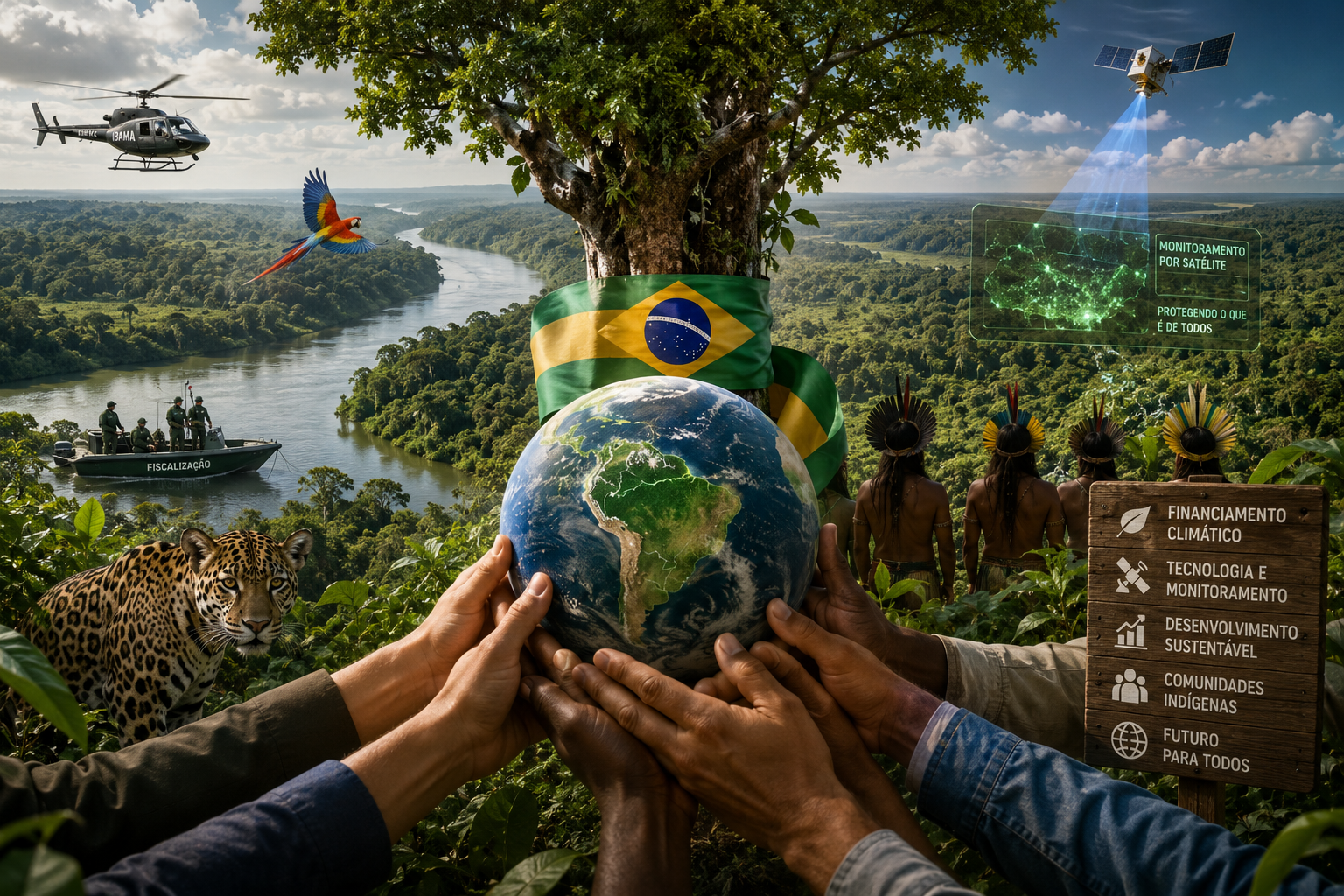
The protection of the Amazon Rainforest has become one of the most important environmental challenges of the 21st century. While the rainforest lies primarily within Brazil’s borders, its environmental significance extends far beyond South America, providing benefits to the entire planet. As climate change accelerates and biodiversity faces unprecedented threats, many experts argue that the international community should provide greater financial and technical support to Brazil in its efforts to protect the world’s largest tropical rainforest.
Why the Amazon Matters to the World
Often referred to as the “lungs of the Earth”, the Amazon Rainforest is one of the planet’s most vital ecosystems. Covering millions of square kilometres, it plays a crucial role in maintaining environmental stability both regionally and globally.
The rainforest stores billions of tonnes of carbon that would otherwise be released into the atmosphere, helping to slow the pace of global warming. It also regulates rainfall patterns across South America, supporting agriculture, water supplies and economic activity throughout the region.
In addition, the Amazon is home to an extraordinary range of plant and animal species, making it one of the most biodiverse areas on Earth. Scientists continue to discover new species within the rainforest, highlighting its immense ecological value.
However, when forests are cleared, burned or degraded, large quantities of carbon dioxide are released into the atmosphere, contributing to climate change and undermining global efforts to reduce greenhouse gas emissions.
The Financial Burden of Conservation
Protecting the Amazon comes at a significant cost. The Brazilian government must invest substantial resources in environmental monitoring, law enforcement and conservation programmes to combat illegal logging, mining and land grabbing.
Authorities are also required to support Indigenous communities, which play a critical role in safeguarding large areas of the rainforest. At the same time, Brazil faces the challenge of balancing environmental protection with economic development, particularly in regions where poverty and limited economic opportunities remain persistent concerns.
Restricting certain forms of land use and resource extraction may help preserve the rainforest, but it can also limit short-term economic gains, creating political and social challenges for policymakers.
Why Wealthier Nations Should Contribute
Many economists, environmental experts and climate policy specialists argue that wealthier nations should provide greater assistance to Brazil because the benefits of preserving the Amazon are shared globally.
Developed countries have historically been responsible for a significant proportion of global greenhouse gas emissions and have benefited from decades of industrialisation. As a result, some experts believe they have a responsibility to contribute towards protecting ecosystems that help mitigate climate change.
International support could take several forms, including climate finance, payments for ecosystem services, investment in sustainable industries, advanced monitoring technologies and funding for Indigenous-led conservation initiatives.
Such assistance could help Brazil strengthen environmental protection while supporting sustainable economic development in Amazonian regions.
Concerns Over International Involvement
Despite widespread support for increased international cooperation, some critics caution against excessive foreign involvement in Amazon conservation.
They argue that Brazil must retain full sovereignty over its natural resources and that international funding arrangements could potentially come with political conditions or external influence over domestic policy decisions.
For this reason, many analysts believe that any international support should be based on partnership and mutual respect, ensuring that Brazil maintains control over its own environmental and development priorities.
A Shared Global Responsibility
The Amazon Rainforest provides environmental benefits that extend far beyond Brazil’s borders, yet much of the financial burden of protecting it falls on the Brazilian government and local communities.
As climate change continues to pose growing risks to economies, ecosystems and societies worldwide, the case for greater international support is becoming increasingly compelling. By helping Brazil protect the Amazon, the global community would not only support one of the world’s most important natural assets but also invest in a more stable and sustainable future for generations to come.
The Amazon may be located within Brazil, but its preservation is a matter of global importance. Protecting it is not solely Brazil’s responsibility—it is a shared challenge that requires international commitment, cooperation and long-term investment.
driven by a global temperature increase now hovering near 1.43°C above pre-industrial levels. This warming is most visible in the cryosphere, where the world’s ice is in rapid retreat. In the Arctic, summer sea ice has shrunk by roughly 40% since 1979, while mountain glaciers—from the Swiss Alps to the Himalayas—have lost billions of tonnes of mass, destabilizing local ecosystems and creating thousands of new, flood-prone glacial lakes.
As this ice melts and warmer seawater expands, global sea levels are rising by an accelerated 4.77 mm annually. This shift is physically altering the Earth’s map, creating thousands of kilometers of new coastline in the north while simultaneously threatening to submerge established coastal megacities.
On land, the Amazon Rainforest is nearing a critical “tipping point.” Satellite imagery reveals a “fishbone” pattern of deforestation that has fragmented the jungle, weakening its ability to act as a carbon sink and disrupting rainfall patterns across South America. Similarly, the near-total disappearance of the Aral Sea serves as a stark visual warning of how combined human activity and rising heat can desertify once-vast water bodies.
Ultimately, these aren’t just isolated environmental changes; they are interconnected “telltale signs” of a warming world. From the darkening of snow (which absorbs more heat) to the record-breaking temperatures in Antarctica, the physical evidence confirms that human-driven warming is now the dominant force shaping Earth’s geography.
1. The Arctic: Shrinking Sea Ice
Since satellite monitoring began in 1979, the Arctic has lost roughly 40% of its summer sea ice extent. This creates a feedback loop: as white ice (which reflects heat) disappears, the dark ocean absorbs more energy, accelerating warming.
World of Change: Arctic Sea Ice
2. The Amazon: Fragmentation and Deforestation
Satellite timelapses of the Amazon often show a “fishbone” pattern of deforestation. Roads are cut into the forest, and clearing then fans out from those roads. Between 2000 and 2025, vast tracts of primary rainforest have been converted into pasture and cropland, reducing the region’s ability to act as a global carbon sink.
World of Change: Amazon Deforestation
3. Drastic Water Loss: The Aral Sea
While partly driven by irrigation projects, the near-total disappearance of the Aral Sea is often cited by NASA as a premier example of how human activity and shifting climate patterns can desertify an entire region in just a few decades.
World of Change: Shrinking Aral Sea
4. Glacial Retreat: Columbia Glacier, Alaska
Alaska’s Columbia Glacier is one of the most rapidly changing glaciers in the world. Since 1980, it has retreated more than 20 kilometres and lost over half of its total thickness.
NASA Eyes on the Earth
Share this post :
Facebook
Twitter
LinkedIn
Pinterest
Latest News

₹22,006 Crore vs ₹6.25 Crore: Inside the Subhash Chandra Insolvency Controversy
September 1, 2026
No Comments

Can America Really Isolate Iran? The Limits of Economic Warfare in a Divided World
August 27, 2026
No Comments

Artificial Intelligence Must Serve Humanity, Not Just Shareholders
August 7, 2026
No Comments