


Escalating US-Iran Conflict Sends Oil Prices Higher: What It Means for India and the Global Economy
Former Reserve Bank of India Governor Dr Raghuram Rajan has been appointed to a Federal Reserve task force reviewing balance sheet policy as part of a comprehensive assessment of the US central bank’s monetary policy framework.
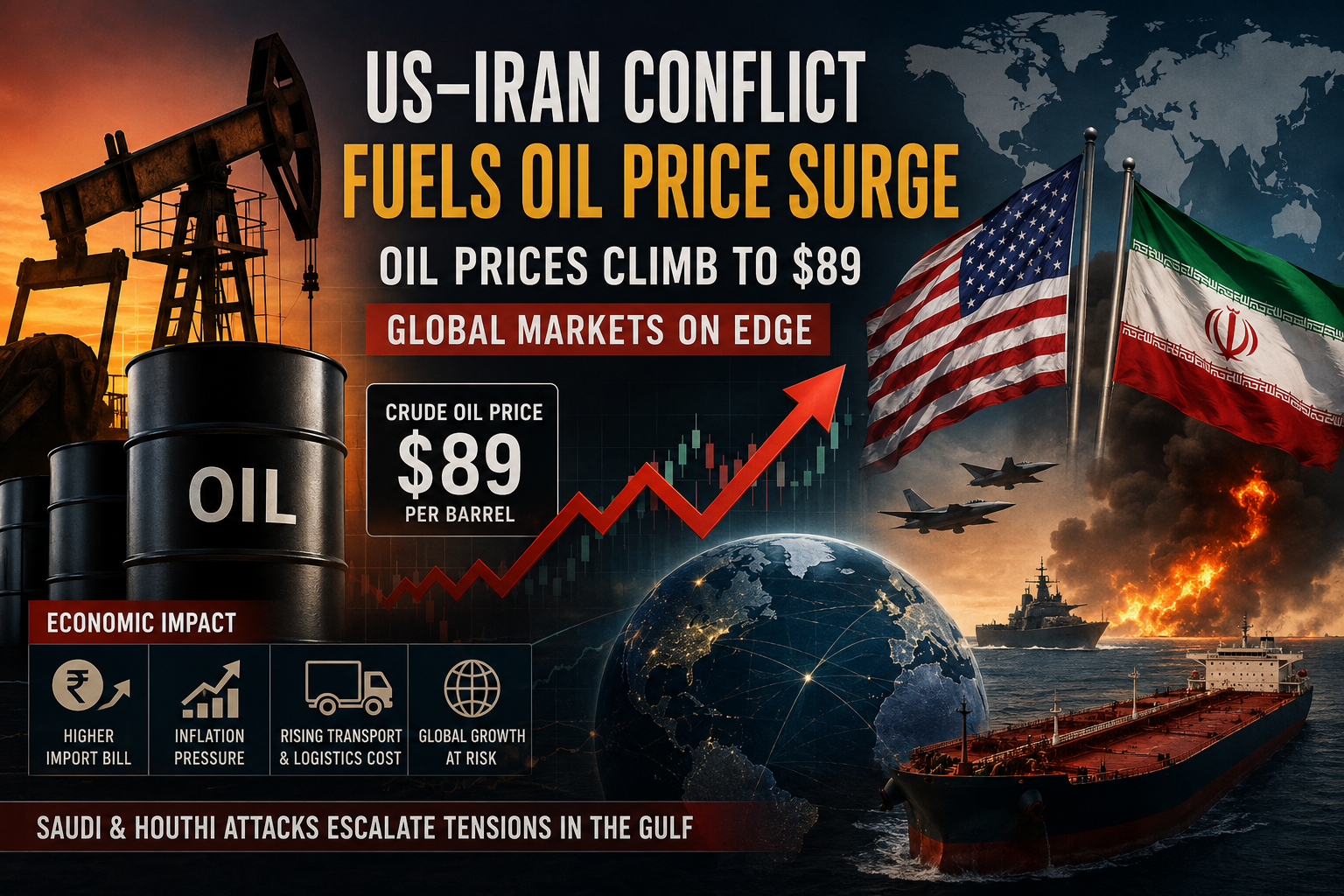
The ongoing military confrontation between the United States and Iran has entered a more dangerous phase, with renewed attacks involving Iran-backed Houthi forces and reported strikes targeting Saudi-linked shipping in the Red Sea. The widening conflict has once again rattled global energy markets, driving crude oil prices sharply higher as investors fear prolonged disruptions to one of the world’s most important oil-producing regions. Recent trading has seen Brent crude surge close to or above the US$90–100 per barrel range amid heightened geopolitical tensions and concerns over the security of key maritime oil routes.
Middle East: The World’s Energy Lifeline
The Gulf region remains the heart of the global energy industry, accounting for a significant share of international crude oil exports. Strategic waterways such as the Strait of Hormuz and the Bab el-Mandeb Strait are vital shipping corridors through which millions of barrels of crude oil pass every day.
With military operations continuing between the United States and Iran, and Houthi attacks reportedly expanding towards Saudi-linked shipping, concerns have intensified that any further disruption could significantly reduce global oil supplies. Analysts warn that if these routes remain under threat, oil prices could rise even further in the coming weeks.
India Faces Significant Economic Risks
India imports nearly 85% of its crude oil requirements, with a substantial portion sourced from Gulf nations including Saudi Arabia, Iraq, the United Arab Emirates and Kuwait. Any sustained increase in oil prices therefore has immediate consequences for the Indian economy.
Higher crude prices could lead to:
- Increased petrol, diesel and LPG prices.
- Higher transportation and logistics costs.
- Rising food prices due to more expensive freight.
- Greater inflationary pressure on households.
- A wider current account deficit because of a larger import bill.
- Additional pressure on the Indian rupee if oil imports become more expensive.
- Reduced fiscal flexibility if the government chooses to absorb part of the fuel price increase.
If crude remains elevated for several months, India’s economic growth could slow as higher energy costs reduce both consumer spending and industrial profitability.
Global Economic Impact
The consequences extend far beyond India.
Europe
European nations remain vulnerable due to high energy costs and continued dependence on imported oil and liquefied natural gas. Another energy shock could increase inflation and complicate monetary policy.
China
As the world’s largest crude oil importer, China faces rising manufacturing and transportation costs, potentially affecting exports and global supply chains.
Japan and South Korea
Both countries rely heavily on imported energy from the Gulf. Prolonged disruptions could increase electricity generation costs and weaken industrial competitiveness.
Developing Economies
Emerging markets with limited foreign exchange reserves may struggle with larger import bills, currency depreciation and rising inflation, increasing the risk of debt and balance-of-payments pressures.
Shipping and Insurance Costs Rising
Even before any physical disruption to oil production, geopolitical tensions are pushing up the cost of marine insurance and freight.
Oil tankers navigating the Red Sea and nearby waters now face higher insurance premiums and security risks. Some shipping companies are considering longer routes around southern Africa, increasing transport times and fuel costs, which are ultimately passed on to consumers worldwide.
Financial Markets Under Pressure
Higher oil prices typically create volatility across global financial markets.
Energy companies often benefit from higher crude prices, while airlines, logistics firms, automobile manufacturers and other fuel-intensive industries face increased operating costs. Investors are also likely to shift capital towards safe-haven assets such as gold and government bonds during periods of geopolitical uncertainty.
Can Diplomacy Prevent a Wider Crisis?
Diplomatic efforts continue behind the scenes, but military exchanges between the United States, Iran and Iran-backed groups have significantly increased the risk of regional escalation.
Should Saudi Arabia become more directly involved or if major shipping lanes are severely disrupted, the conflict could evolve into a broader regional crisis with serious implications for global energy security.
Conclusion
The current US-Iran confrontation is no longer only a military issue—it has become a global economic concern. Rising oil prices threaten inflation, trade, economic growth and financial stability across both developed and developing economies.
For India, where economic growth depends heavily on affordable energy imports, prolonged geopolitical instability in the Gulf represents a significant challenge. Policymakers may need to strengthen strategic petroleum reserves, diversify energy imports and accelerate investment in renewable energy to reduce long-term dependence on imported crude.
As events continue to unfold, governments, businesses and financial markets around the world will closely monitor developments in the Gulf, recognising that stability in the region remains essential for global economic resilience.
Share this post :
Facebook
Twitter
LinkedIn
Pinterest
Latest News

₹22,006 Crore vs ₹6.25 Crore: Inside the Subhash Chandra Insolvency Controversy
September 1, 2026
No Comments

Can America Really Isolate Iran? The Limits of Economic Warfare in a Divided World
August 27, 2026
No Comments

Artificial Intelligence Must Serve Humanity, Not Just Shareholders
August 7, 2026
No Comments