


Economy at a Crossroads: What Mr. Kevin Warsh’s Leadership Means for 2026.
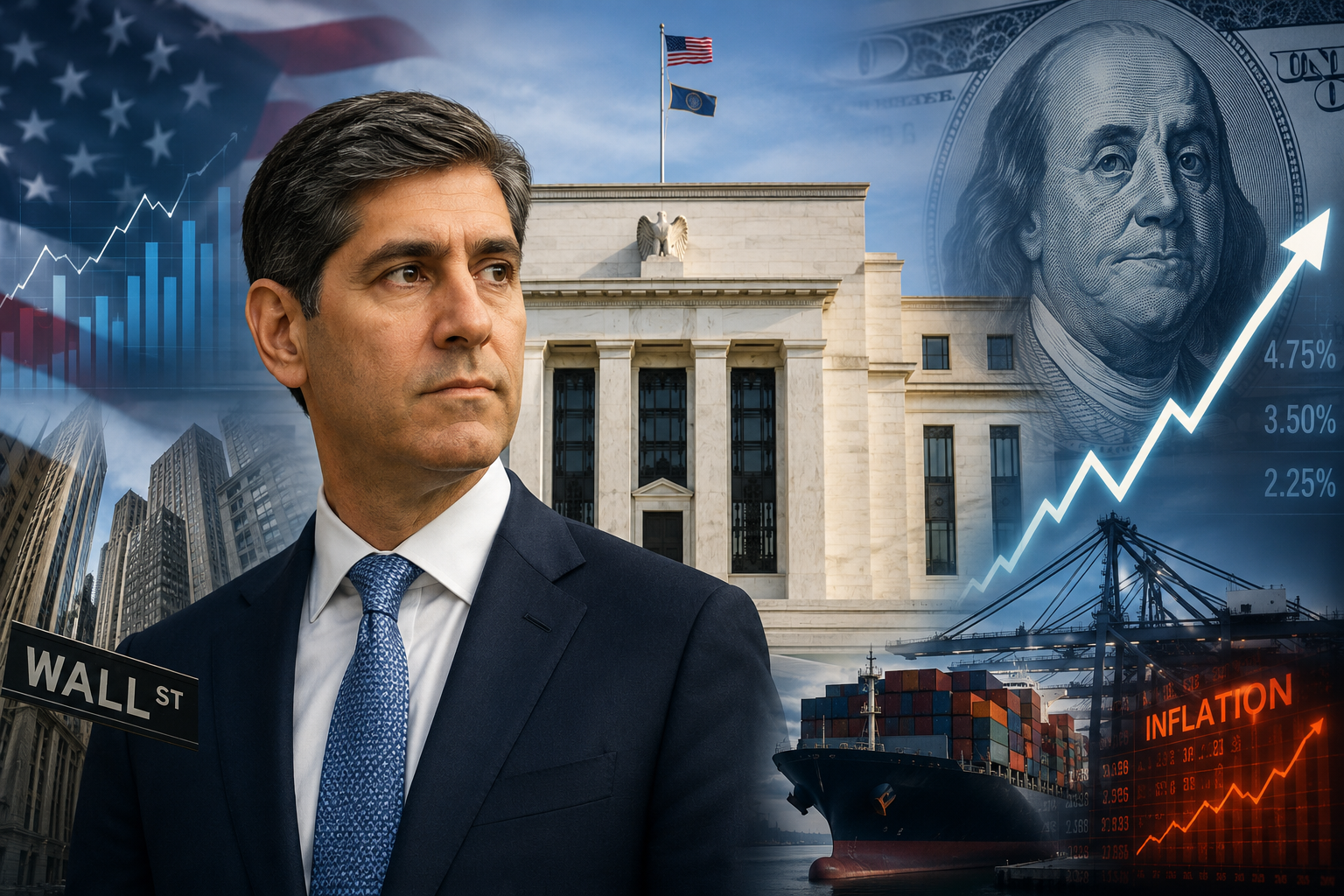
A new chapter has begun for United States monetary policy following the appointment of Mr. Kevin Warsh as Chair of the U.S. Federal Reserve, succeeding Jerome Powell. As one of the most influential figures in global finance, Warsh now faces the difficult challenge of steering the world’s largest economy through a period of persistent inflation, slowing growth and heightened geopolitical uncertainty.
Warsh has already indicated that restoring the Federal Reserve’s credibility on price stability and bringing inflation back towards its 2 per cent target will be among his highest priorities. Financial markets are closely watching how his leadership could reshape interest-rate policy and influence the broader economic outlook for the remainder of 2026.
Higher Interest Rates May Remain for Longer
Economists believe that one of the most significant changes under Mr.Warsh could be a more hawkish approach towards inflation. Historically, Warsh has expressed concerns about the long-term risks posed by persistent price pressures.
Should inflation remain above the Federal Reserve’s target, policymakers may keep interest rates elevated for a longer period than investors had previously anticipated. As a result, financial markets have already begun scaling back expectations of aggressive interest-rate cuts during 2026.
Higher borrowing costs could help contain inflation but may also place additional pressure on sectors such as housing, commercial real estate and business investment.
Continued Reduction of the Federal Reserve’s Balance Sheet
Analysts also expect Mr .Warsh to continue reducing the Federal Reserve’s extensive bond holdings accumulated during previous economic crises.
A smaller balance sheet would effectively tighten financial conditions, potentially keeping long-term borrowing costs higher and reducing liquidity across financial markets. While such measures may support efforts to control inflation, they could also slow economic activity.
A Less Predictable Federal Reserve
Another notable shift could involve a reduction in the Federal Reserve’s use of forward guidance. Warsh has previously questioned whether central banks should provide extensive indications about future policy decisions.
A less predictable policy approach may lead to increased market volatility as investors attempt to interpret economic data and anticipate future interest-rate moves.
Why Inflation Signals Remain Mixed
Although consumer price inflation has moderated from its recent highs, several factors continue to complicate the Federal Reserve’s inflation-fighting efforts.
Energy prices remain vulnerable to geopolitical developments, particularly in the Middle East. Labour costs continue to rise as employers compete for workers, while ongoing supply-chain disruptions linked to international tensions continue to affect production costs.
In addition, the rapid expansion of artificial intelligence infrastructure, including data centres and semiconductor manufacturing facilities, is increasing demand for electricity, industrial materials and specialised labour.
These factors suggest that inflation may decline more slowly than many investors currently expect.
US Economic Outlook for the Second Half of 2026
Despite ongoing challenges, the American economy continues to benefit from several strengths.
The labour market remains relatively robust, consumer spending has shown resilience, and investment in artificial intelligence, semiconductors and data centres continues to support economic activity. Major technology companies are also reporting healthy earnings, helping to underpin broader market confidence.
However, significant risks remain.
Higher interest rates continue to weigh on property markets, while large federal budget deficits and growing government debt are raising concerns among investors. Energy market volatility, trade disputes and weaker global growth could further complicate the economic outlook.
Most economists expect the United States to avoid a deep recession in 2026, although growth is likely to remain moderate.
Current forecasts suggest:
- GDP growth between 1.5 and 2.5 per cent;
- Inflation gradually declining but remaining above the Federal Reserve’s 2 per cent target;
- Interest rates staying relatively high;
- Unemployment increasing slightly but remaining below recessionary levels;
- A strong US dollar supported by higher interest rates; and
- Continued stock market volatility, offset in part by strong growth in AI-related industries.
Implications for India and Emerging Markets
The Federal Reserve’s policy decisions have consequences far beyond the United States.
A higher-for-longer interest-rate environment could strengthen the US dollar and place pressure on emerging-market currencies, including the Indian rupee. It may also increase external borrowing costs for developing economies and contribute to volatility in foreign investment flows.
For India, however, lower global crude oil prices could help offset some of these challenges by reducing import costs and supporting domestic economic growth.
The Challenge Ahead
As Mr.Kevin Warsh begins his tenure at the Federal Reserve, the central question facing policymakers is whether inflation can be brought under control without triggering a significant economic slowdown.
The most likely scenario for 2026 remains one of slower but positive growth, accompanied by gradually easing inflation. Achieving that balance will be the defining test of Mr Warsh’s leadership and could shape the direction of the global economy for years to come.
Share this post :
Facebook
Twitter
LinkedIn
Pinterest
Latest News

Can America Really Isolate Iran? The Limits of Economic Warfare in a Divided World
August 27, 2026
No Comments

Artificial Intelligence Must Serve Humanity, Not Just Shareholders
August 7, 2026
No Comments

Is India’s Young Generation Preparing to Overturn Traditional Politics?
August 4, 2026
No Comments