


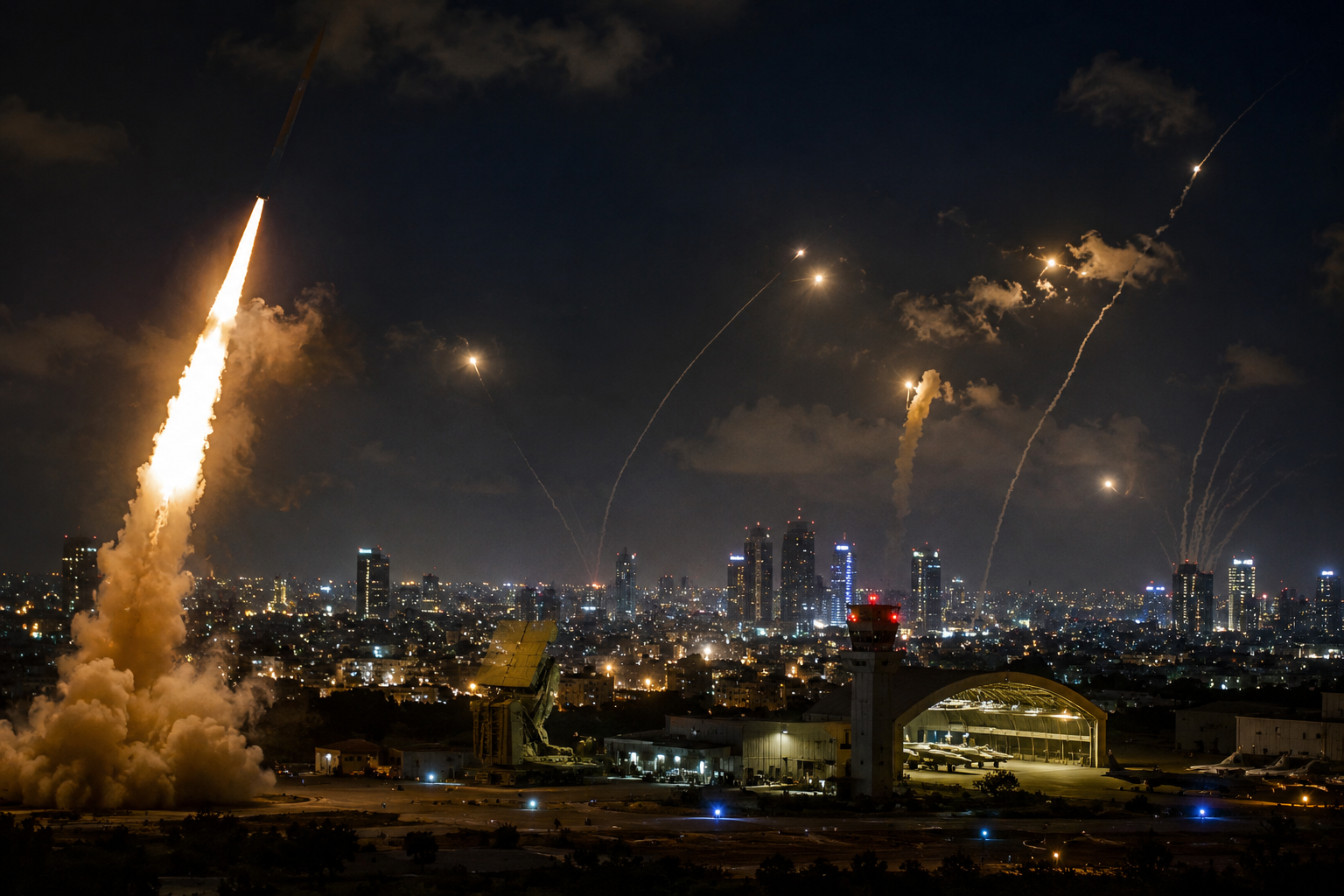
Fresh tensions have erupted in the Middle East after Iran launched missile attacks targeting Israeli military installations, raising fears of a renewed confrontation between the two regional rivals and casting uncertainty over ongoing diplomatic efforts involving the United States.
According to reports from Iranian state-linked sources, the Islamic Revolutionary Guard Corps (IRGC) claimed responsibility for missile strikes aimed at Israeli air bases, including Nevatim and Tel Nof Airbase describing the attacks as retaliation for recent Israeli military operations. Israeli authorities confirmed that missile launches were detected and that air defence systems were activated to intercept incoming threats. Reports indicated that warning sirens sounded across several parts of Israel as residents were instructed to seek shelter.
The latest exchange of hostilities marks one of the most significant escalations since the ceasefire reached earlier this year. Iranian officials have accused Israel of violating previous understandings through military actions in Lebanon and elsewhere in the region, while Israeli leaders have maintained that their operations are necessary to address security threats.
The renewed violence has also placed pressure on diplomatic efforts led by the United States. Washington has been attempting to broker a broader agreement aimed at reducing tensions and preventing further escalation. Despite the latest missile exchanges, US President Donald Trump has stated that negotiations with Tehran remain on track and that recent military actions will not derail efforts to reach a diplomatic settlement.
Regional observers warn that the situation remains highly volatile. Both Iran and Israel have exchanged threats in recent days, while military activity has continued across multiple fronts. Analysts fear that any further escalation could draw additional regional actors into the conflict and disrupt international shipping routes and energy markets. Oil prices have already reacted to the uncertainty, reflecting concerns over potential instability in the Strait of Hormuz, a critical artery for global energy supplies.
International calls for restraint have intensified as governments around the world monitor developments closely. Diplomatic efforts continue behind the scenes, but the latest missile strikes underscore the fragility of the current ceasefire arrangements and the challenges facing negotiators seeking a lasting settlement.
For now, the Middle East remains on edge, with the prospect of a broader regional confrontation continuing to concern policymakers, investors and security experts alike.


