


US Visa Overhaul Clouds American University Dream for International Students
Former Reserve Bank of India Governor Dr Raghuram Rajan has been appointed to a Federal Reserve task force reviewing balance sheet policy as part of a comprehensive assessment of the US central bank’s monetary policy framework.
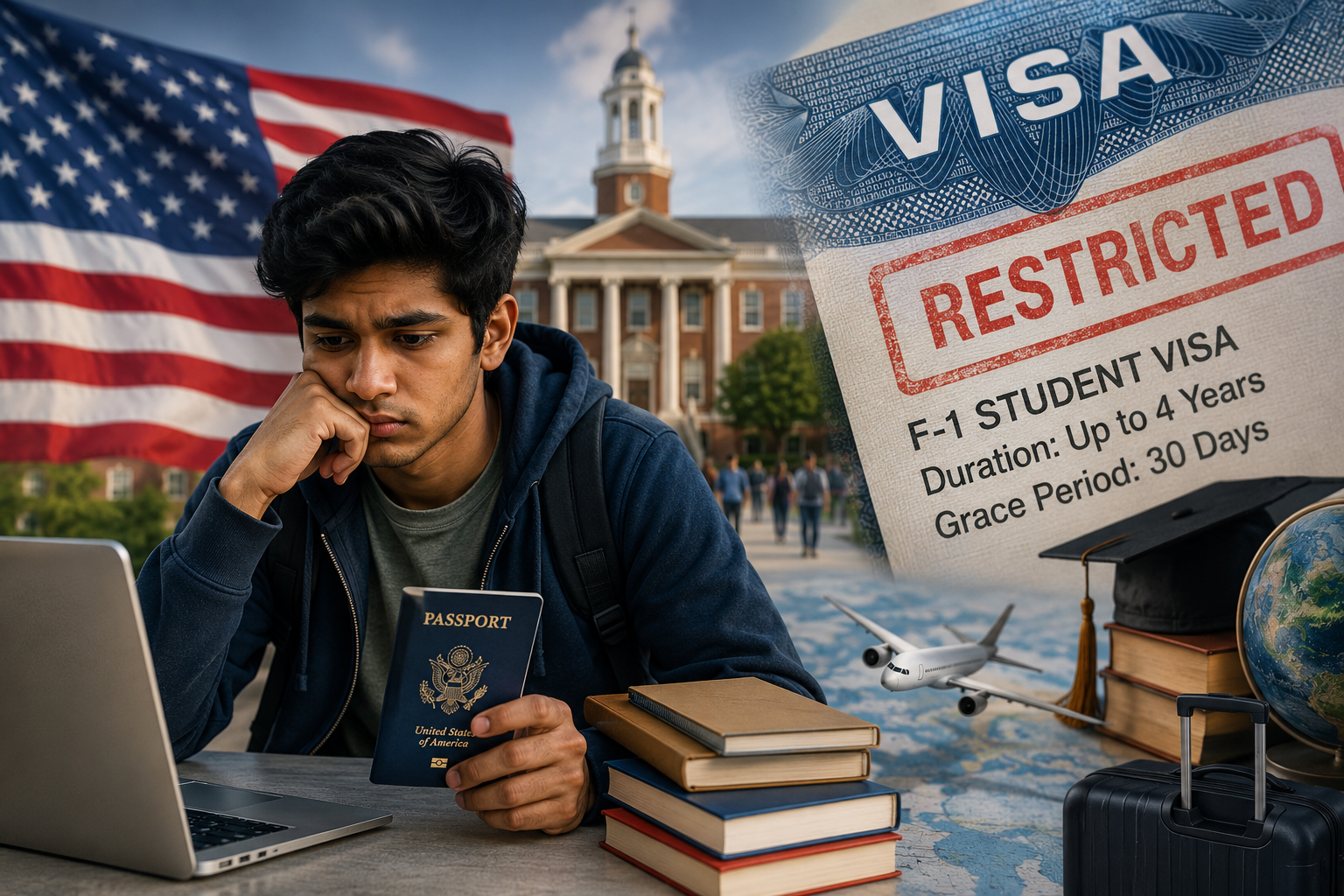
The United States has introduced sweeping changes to its international student visa system, raising fresh concerns among universities, education consultants and prospective students worldwide. While the reforms stop short of doubling the overall cost of studying in America, they are expected to increase expenses, administrative burdens and uncertainty for thousands of students, particularly those pursuing longer degree programmes.
Under the new regulations announced by the US Department of Homeland Security, most F-1 student visas will now be issued for a fixed period of up to four years, replacing the long-standing ‘duration of status’ policy that previously allowed students to remain in the country for the length of their academic programme, provided they complied with visa conditions.
For many undergraduate courses, the four-year limit may be sufficient. However, students enrolled in extended degree programmes, doctoral research, or combined bachelor’s and master’s qualifications may now be required to apply for visa extensions or leave the United States and seek re-entry before completing their studies. Critics argue that this introduces unnecessary bureaucracy, additional costs and greater uncertainty.
The reforms also reduce the post-study grace period from 60 days to 30 days, giving graduates less time to arrange employment, further education or departure from the country. In addition, students wishing to transfer between institutions or significantly alter their academic programme will face tighter regulatory oversight.
Higher education leaders across the United States have expressed concern that the measures could make American universities less attractive to international applicants. Overseas students contribute billions of dollars annually to the US economy through tuition fees, accommodation, living expenses and research activities. Any decline in enrolment could therefore have significant financial consequences for universities already facing demographic challenges.
Indian students are expected to be among the most affected. India has become the largest source of international students studying in the United States, particularly in science, technology, engineering and mathematics (STEM) disciplines. Industry analysts have already reported softer demand for US higher education owing to rising tuition fees, visa uncertainty and changing employment prospects.
Although some media reports have suggested that the new visa regime could ‘double’ the cost of studying in America, the available evidence does not support such a broad conclusion. There has been no official announcement indicating that tuition fees or visa charges will double. Instead, the financial impact is expected to arise from possible future visa extension applications, additional legal documentation, travel expenses and longer processing times, with the actual increase varying from student to student.
Supporters of the reforms argue that the measures strengthen immigration oversight, reduce opportunities for visa misuse and enhance national security. The Department of Homeland Security has stated that fixed visa periods will make monitoring compliance easier while closing loopholes in the previous system.
Opponents, however, believe the policy risks undermining America’s long-standing reputation as the world’s leading destination for higher education. Universities warn that increased uncertainty could encourage talented students to choose alternative destinations such as Canada, Australia, Germany and several European countries, many of which continue to compete aggressively for international talent.
As the new rules move towards implementation, students planning to study in the United States are being advised to carefully review programme durations, visa validity periods and future extension requirements before making financial commitments. For many aspiring international scholars, the American dream remains alive—but navigating it has become considerably more complex.
Share this post :
Facebook
Twitter
LinkedIn
Pinterest
Latest News

₹22,006 Crore vs ₹6.25 Crore: Inside the Subhash Chandra Insolvency Controversy
September 1, 2026
No Comments

Can America Really Isolate Iran? The Limits of Economic Warfare in a Divided World
August 27, 2026
No Comments

Artificial Intelligence Must Serve Humanity, Not Just Shareholders
August 7, 2026
No Comments