


El Niño Threatens India’s Food Security: Rising Inflation and Weaker Rural Demand Could Test the World’s Fastest-Growing Major Economy
The protection of the Amazon Rainforest has become one of the most important environmental challenges of the 21st century.
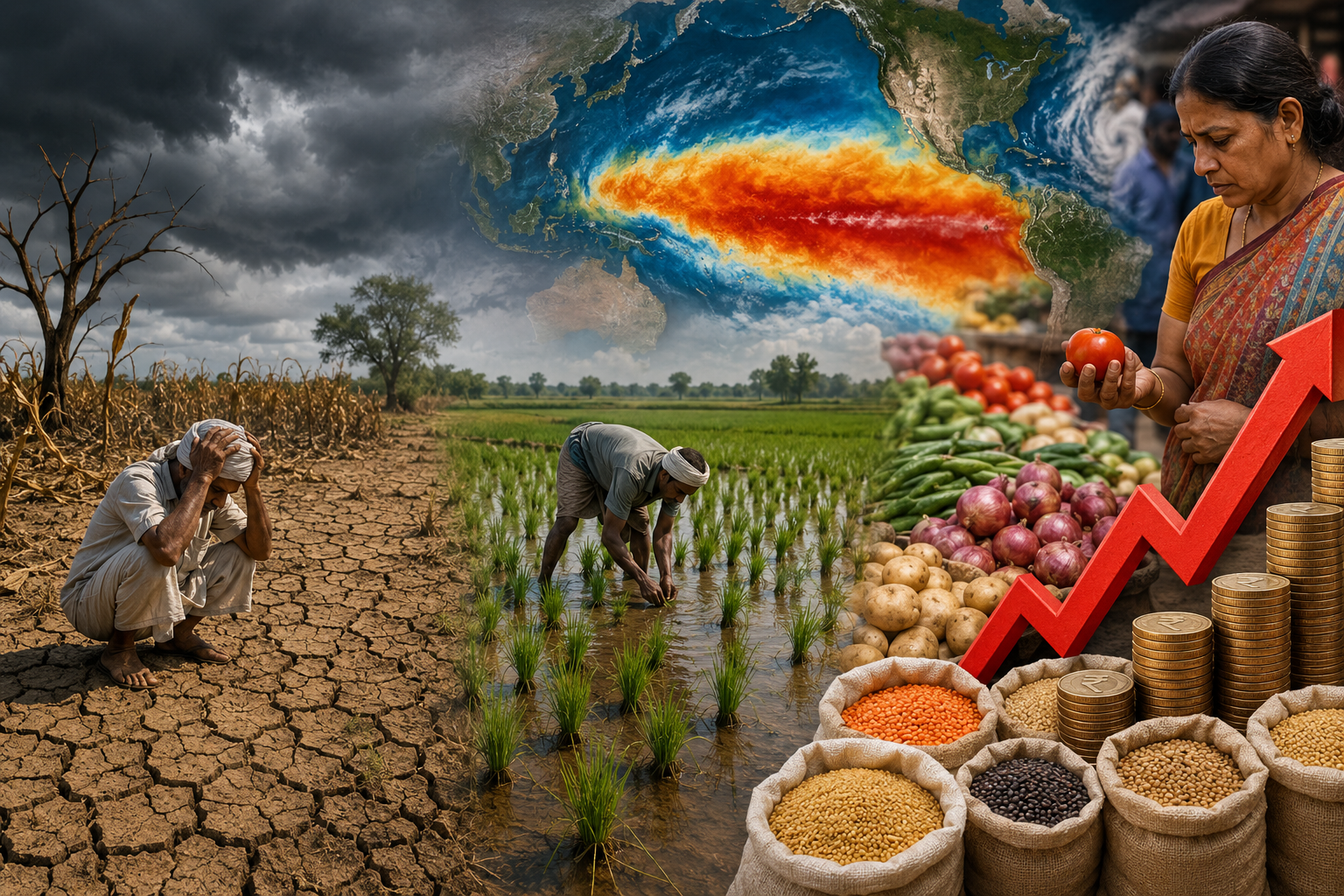
India, home to more than 1.4 billion people and one of the world’s largest agricultural producers, could face renewed economic challenges if a strong El Niño weather pattern weakens this year’s monsoon. While the country has strengthened its food security systems over the past two decades, experts warn that an extended period of below-average rainfall could reduce agricultural output, drive up food prices and slow rural economic activity.
Agriculture at the Centre of the Risk
El Niño, a naturally occurring climate phenomenon caused by unusually warm sea surface temperatures in the central and eastern Pacific Ocean, has historically been associated with weaker Indian summer monsoons. Although not every El Niño results in drought, many events have led to rainfall deficits that have affected crop production across large parts of the country.
Agriculture contributes around one-sixth of India’s economic output, but its importance extends far beyond GDP. More than 40 per cent of India’s workforce still depends directly or indirectly on farming, making the sector a cornerstone of rural livelihoods and domestic consumption.
A weaker monsoon could reduce the production of several major crops, including rice, pulses, oilseeds, sugarcane and cotton. Analysts estimate that a severe El Niño could lower national food grain production by between 5 and 10 per cent, with some rain-fed regions suffering considerably larger losses.
Rice and pulses are particularly vulnerable because large areas remain dependent on seasonal rainfall. Reduced harvests would tighten domestic supplies and place further pressure on food markets.
Food Inflation Could Return as a Major Concern
For consumers, the most immediate consequence would likely be higher food prices.
Vegetables and pulses, which are especially sensitive to weather-related disruptions, could experience the sharpest price increases. Cereals, edible oils and fruit may also become more expensive if production declines and supply chains tighten.
Economists estimate that food inflation could rise by between two and four percentage points during a severe El Niño event, depending on the extent of rainfall shortages and the effectiveness of government intervention through buffer stocks and imports.
Higher food prices would disproportionately affect lower-income households, where food accounts for a significant share of monthly expenditure.
Rural Demand Faces Fresh Pressure
A weak agricultural season would also reduce rural incomes, limiting household spending across India’s vast countryside.
Lower farm earnings typically translate into weaker demand for tractors, motorcycles, fertilisers, consumer goods and rural financial services. Companies with significant exposure to India’s rural economy could therefore experience slower sales growth if agricultural incomes come under sustained pressure.
The impact could extend well beyond farming, affecting manufacturing, retail and financial services that rely heavily on rural consumption.
Economic Growth May Moderate
India has emerged as one of the world’s fastest-growing major economies, supported by infrastructure investment, manufacturing expansion and robust domestic demand. However, agriculture remains an important contributor to overall economic stability.
A significant reduction in agricultural output could reduce national GDP growth by an estimated 0.3 to 0.8 percentage points while also complicating inflation management for policymakers.
Persistently high food inflation could limit the central bank’s ability to ease monetary policy, potentially keeping borrowing costs higher for longer.
Better Prepared Than in Previous Decades
Despite these risks, India enters the current period in a stronger position than during previous El Niño episodes.
The country maintains larger food buffer stocks, has expanded irrigation coverage in several states, improved weather forecasting capabilities and introduced crop insurance schemes designed to reduce farmers’ financial losses.
The government also has greater capacity to stabilise domestic food supplies through timely imports and strategic market interventions when shortages emerge.
These measures are expected to cushion the impact, although they cannot fully eliminate the risks posed by a severe or prolonged monsoon deficit.
Outlook
The ultimate economic impact will depend on the intensity of El Niño, the geographical distribution of monsoon rainfall and the speed of policy responses.
If rainfall remains close to average, the effects on agriculture and inflation are likely to be limited. However, should a strong El Niño significantly weaken the monsoon, India could face slower agricultural growth, higher food inflation and softer rural demand at a time when maintaining economic momentum remains a key policy priority.
For investors, policymakers and businesses alike, the coming monsoon season will be closely watched as one of the most important economic indicators for India in the months ahead. With food security, inflation and rural incomes all closely linked to the strength of the monsoon, the season’s outcome could have far-reaching implications for India’s economy and financial markets.
Share this post :
Facebook
Twitter
LinkedIn
Pinterest
Latest News

₹22,006 Crore vs ₹6.25 Crore: Inside the Subhash Chandra Insolvency Controversy
September 1, 2026
No Comments

Can America Really Isolate Iran? The Limits of Economic Warfare in a Divided World
August 27, 2026
No Comments

Artificial Intelligence Must Serve Humanity, Not Just Shareholders
August 7, 2026
No Comments