


Editorial | India’s Education Crisis Demands Dialogue, Not Division
Former Reserve Bank of India Governor Dr Raghuram Rajan has been appointed to a Federal Reserve task force reviewing balance sheet policy as part of a comprehensive assessment of the US central bank’s monetary policy framework.
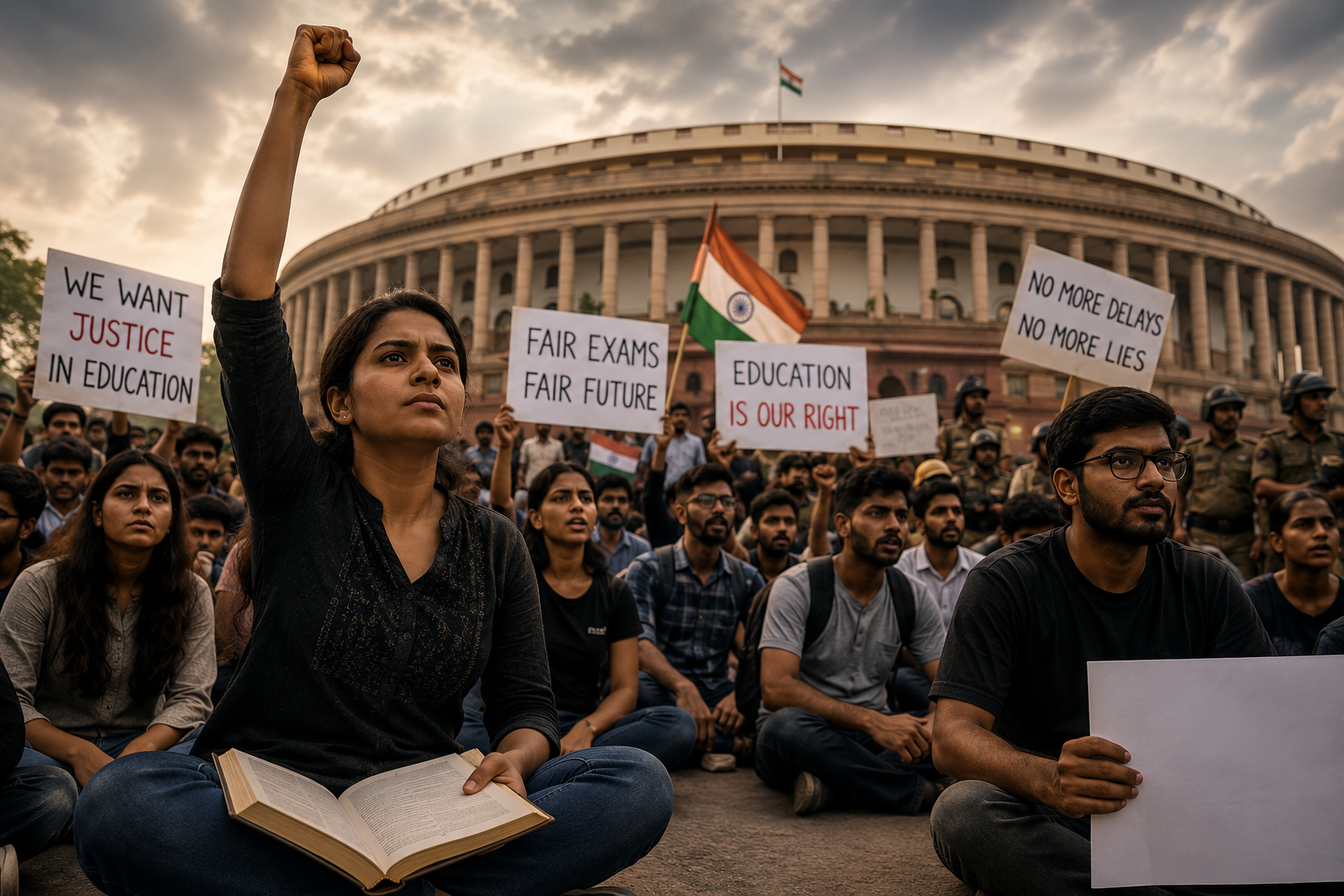
India’s education system stands at a critical crossroads. For months, concerns over examination irregularities, delays in recruitment, student unemployment, institutional governance and unequal access to quality education have fuelled public frustration across different parts of the country. Student organisations, teachers, social activists and opposition leaders have increasingly called for comprehensive reforms, arguing that the country’s future depends on restoring confidence in its education system.
Recent demonstrations have once again brought these issues into the national spotlight. Peaceful protests, hunger strikes and public campaigns have sought to draw attention to what many participants describe as a deep institutional crisis. Regardless of political affiliation, the concerns raised by students deserve careful consideration, as they represent the aspirations of millions of young Indians.
One of the most powerful forms of democratic protest has traditionally been the hunger strike. Throughout India’s history, peaceful civil resistance has played a significant role in shaping public policy. When respected social workers or activists choose such methods, governments have a responsibility to engage in dialogue rather than allowing tensions to escalate.
As protests have continued, the political debate has also intensified. Opposition parties have criticised the government’s handling of the situation and have demanded a full discussion in Parliament. Reports of demonstrations involving Members of Parliament, including Congress leader Rahul Gandhi and other opposition representatives, have further highlighted the growing political divide over the issue. These developments underline the need for democratic institutions to function effectively and provide a forum for constructive debate.
A healthy parliamentary democracy depends on discussion rather than confrontation. Parliament exists so that differing viewpoints can be heard, challenged and debated. When major national concerns affecting millions of students become highly polarised, citizens naturally expect elected representatives to engage in meaningful discussion and seek practical solutions.
The education sector is far too important to become another battleground for political point-scoring. India’s young population is one of its greatest strengths. However, that advantage can only be realised if students have confidence in examination systems, recruitment processes, educational standards and career opportunities.
Many citizens are asking legitimate questions. Could the authorities have responded more quickly to the concerns raised by students? Has sufficient dialogue taken place between the government, educational institutions and protest organizers? Are existing policies adequate to restore public confidence in the education system? These are questions that deserve reasoned answers rather than political rhetoric.
Leadership is ultimately measured not only by defending existing policies but also by acknowledging shortcomings and implementing reforms where necessary. Whether changes involve administrative restructuring, greater accountability, or ministerial responsibility is a matter for the elected government and Parliament. However, transparency, responsiveness and public engagement remain essential elements of democratic governance.
India’s democracy has always been strongest when governments and citizens engage through peaceful dialogue. Protest is a constitutional right when conducted peacefully, and law enforcement authorities also have a duty to maintain public order while respecting fundamental rights. Achieving the right balance requires restraint, professionalism and respect for the rule of law from all sides.
The current situation should not be viewed simply as a political contest between the government and the opposition. It is fundamentally about the future of India’s students. Every lost academic year, every disputed examination and every unanswered concern affects young people whose ambitions will shape the nation’s economic and social future.
The solution does not lie in confrontation. It lies in transparent investigations where necessary, meaningful parliamentary debate, open communication with students and educational stakeholders, and a clear roadmap for reform. Restoring public confidence requires more than assurances—it requires visible action.
India has overcome many challenges through democratic dialogue and institutional reform. The education sector deserves the same commitment. Students are not merely demanding answers; they are asking for a system they can trust. Their voices should be heard with seriousness, empathy and respect.
Editorial Note: This article represents the editorial opinion of Salt Global News. Readers are encouraged to follow verified official statements and independent reporting regarding ongoing political developments.
Share this post :
Facebook
Twitter
LinkedIn
Pinterest
Latest News

₹22,006 Crore vs ₹6.25 Crore: Inside the Subhash Chandra Insolvency Controversy
September 1, 2026
No Comments

Can America Really Isolate Iran? The Limits of Economic Warfare in a Divided World
August 27, 2026
No Comments

Artificial Intelligence Must Serve Humanity, Not Just Shareholders
August 7, 2026
No Comments