


Andy Burnham Begins His Tenure as Britain’s 59th Prime Minister: Experience, Expectations and the Challenges Ahead
Potential public listings by two of the world’s most influential technology companies may reshape investment trends, capital flows and the global economic landscape.
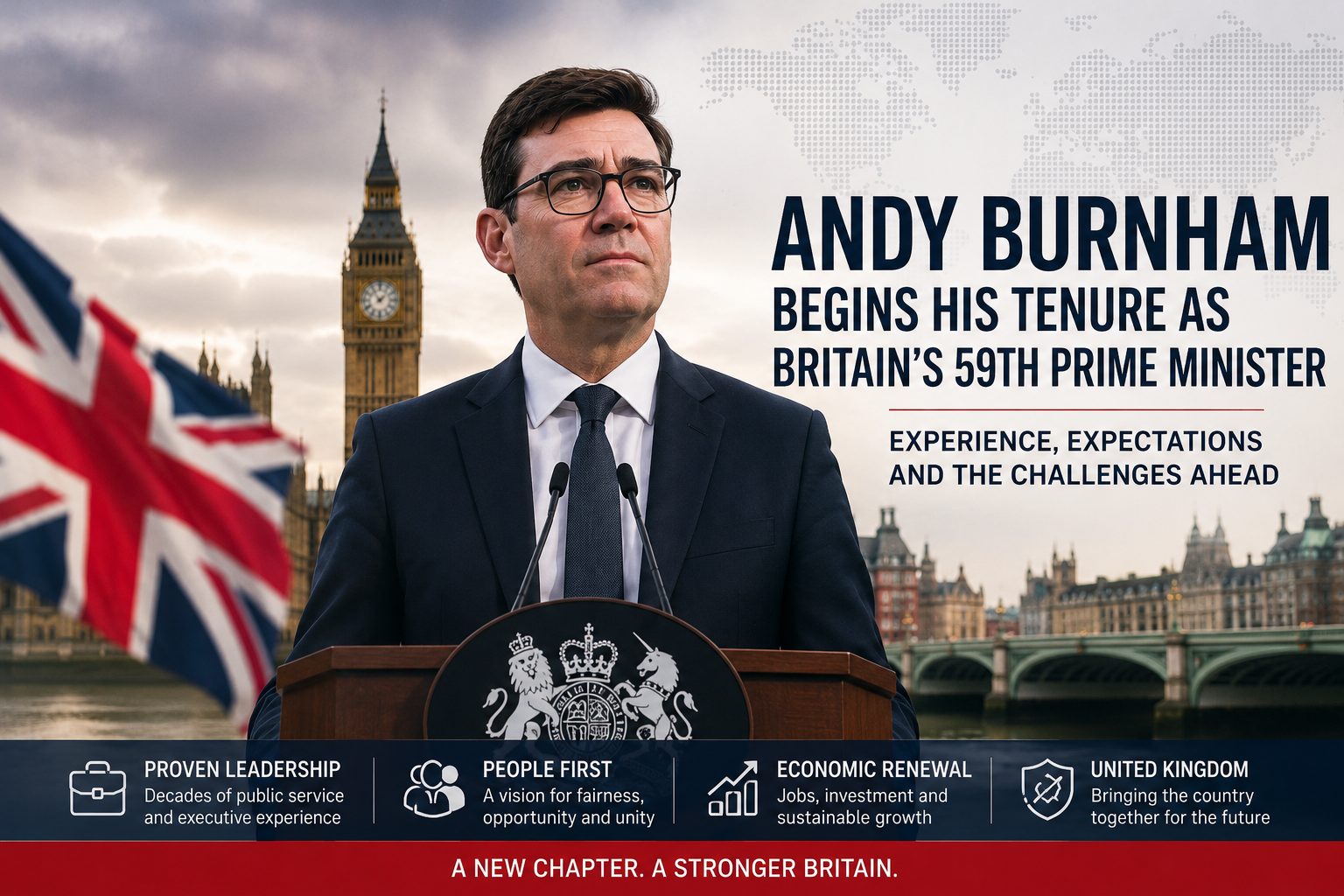
Andy Burnham has formally begun his tenure as the 59th Prime Minister of the United Kingdom, taking office at one of the most challenging periods in modern British history. Following the resignation of Sir Keir Starmer, Burnham was invited by King Charles III to form a new government and has pledged to restore public confidence, revive economic growth and bring greater stability to British politics.
His appointment marks yet another chapter in a decade of political turbulence, with Britain having seen a succession of prime ministers since the Brexit referendum. Burnham’s rise is viewed by many political observers as an opportunity to reconnect the Labour government with voters across both metropolitan and regional Britain.
A Long Political Career
At 56, Andy Burnham brings more than two decades of political experience to Downing Street.
Born in Liverpool, he studied English at the University of Cambridge before entering politics. He was first elected to Parliament in 2001 and quickly established himself as a senior Labour figure.
During previous Labour governments, Burnham held several cabinet positions, including:
- Secretary of State for Health
- Secretary of State for Culture, Media and Sport
- Chief Secretary to the Treasury
His ministerial experience has given him detailed knowledge of Britain’s healthcare system, public finances and government administration.
Following Labour’s defeat in the 2010 General Election, Burnham twice contested the party leadership before taking a different political path by becoming the first elected Mayor of Greater Manchester in 2017.
Building a Reputation in Greater Manchester
Many analysts believe Burnham’s greatest political achievements came outside Westminster.
As Mayor of Greater Manchester, he became known for advocating greater devolution, improved public transport and stronger regional investment.
During the COVID-19 pandemic, Burnham gained national attention after publicly challenging the UK Government over financial support for northern England during local lockdowns. His willingness to confront central government significantly enhanced his public profile and earned him the nickname “King of the North”.
Supporters argue that his mayoral experience demonstrated practical leadership, particularly in transport, housing and regional economic development.
Early Priorities
In his first speech outside 10 Downing Street, Prime Minister Burnham promised immediate action to ease pressure on households facing the rising cost of living.
Among his stated priorities are:
- Tackling the cost-of-living crisis.
- Ending rough sleeping.
- Building more affordable council housing.
- Reforming education and expanding mental health support.
- Creating greater economic opportunities outside London.
- Developing a long-term national strategy for economic renewal.
He has also pledged to present a comprehensive ten-year plan aimed at restoring stability and confidence in Britain.
The Challenges Facing Britain
Despite widespread goodwill surrounding his appointment, Burnham inherits one of the most demanding political agendas in recent decades.
Economic Pressures
Britain continues to experience modest economic growth while households face persistent pressure from higher living costs. Productivity remains weak, public finances are stretched and government borrowing limits policy flexibility.
Business leaders are seeking greater certainty over taxation, investment and industrial policy.
NHS and Healthcare
The National Health Service remains under intense pressure.
Long waiting lists, workforce shortages and increasing demand for healthcare services continue to dominate public concern. Given Burnham’s previous experience as Health Secretary, expectations for meaningful reform are particularly high.
Housing Crisis
Housing affordability has become a major national issue.
High property prices, rising rents and insufficient housebuilding have left many younger families struggling to enter the housing market.
Immigration
Managing both legal and illegal migration remains politically sensitive.
The government must balance border security with labour market needs while maintaining international obligations.
Public Services
Local authorities continue to face financial constraints affecting education, policing, transport and social care.
Rebuilding public services without significantly increasing taxation will require difficult policy choices.
Regional Inequality
One of Burnham’s signature political themes has been reducing the economic divide between London and other parts of Britain.
Whether he can successfully deliver greater regional investment while maintaining fiscal discipline will be closely watched.
International Relations
Internationally, Britain faces continued uncertainty arising from geopolitical tensions, the war in Ukraine, instability in the Middle East and evolving trade relationships with Europe, the United States and Asia.
Maintaining Britain’s global influence while strengthening domestic economic resilience will be a key diplomatic challenge.
Political Stability
Perhaps Burnham’s greatest challenge is restoring trust in British politics itself.
The United Kingdom has experienced exceptional political instability over the past decade, with frequent leadership changes undermining investor confidence and public faith in government.
In his first address as Prime Minister, Burnham acknowledged this reality, saying Britain must once again become a country known for stability, effective government and long-term planning.
Outlook
Andy Burnham assumes office with considerable political experience and a reputation as an advocate for regional Britain. However, experience alone will not determine the success of his premiership.
Economic recovery, NHS reform, housing shortages, public service pressures and geopolitical uncertainty will all test his leadership from the outset.
Whether Burnham can unite a politically divided country, restore confidence in government and deliver sustained economic improvement will shape not only his own legacy but also Britain’s direction for years to come.
Share this post :
Facebook
Twitter
LinkedIn
Pinterest
Latest News

₹22,006 Crore vs ₹6.25 Crore: Inside the Subhash Chandra Insolvency Controversy
September 1, 2026
No Comments

Can America Really Isolate Iran? The Limits of Economic Warfare in a Divided World
August 27, 2026
No Comments

Artificial Intelligence Must Serve Humanity, Not Just Shareholders
August 7, 2026
No Comments